

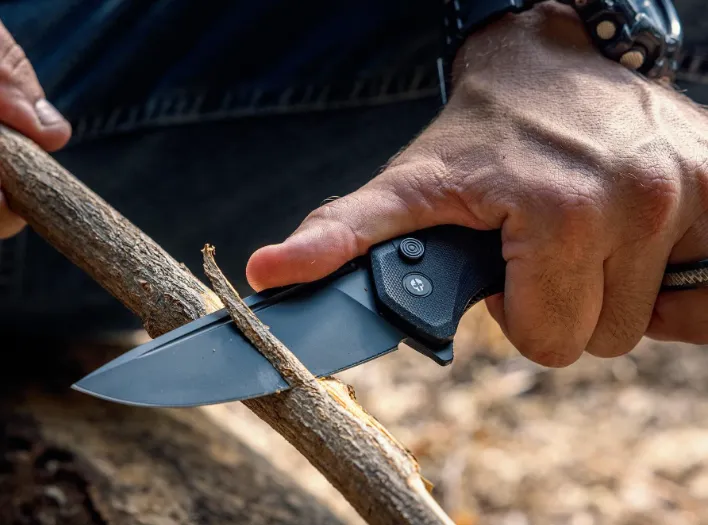
A knife is more than a piece of equipment when the trappings of modern convenience are stripped away. It becomes a means of leverage, defense, and problem-solving all in one. Learning a few basic skills can stretch thin resources, minimize the risk of injury, and help a lost hiker think clearly when the stakes are high. The skills that follow are centered on control, economy, and versatility—all of which are important when the weather turns, the sun goes down, and the consequences of choice become serious.
Mastering Grip, Control, and Safety
It all begins with the position of the blade in your hand. A firm grip allows for accuracy and avoids slips that can lead to life-threatening situations in medical emergencies. Employ a hammer grip for power cuts, pinching the spine with your thumb when accuracy is required. Choking up reduces the working edge of the blade, which improves accuracy when carving or cutting food. Keep your wrist straight, using your arm to cut rather than your wrist, and always cut the food away from your body. The creation of a definite “blood circle” or safe zone where no other person stands helps avoid accidental injuries. Slow and deliberate cuts save energy and develop muscle memory, which is extremely helpful during stressful situations.
Processing Food and Preparing Game
Nutrition is the fuel for survival, and the cutter is the tool for preparing the food you hunted for consumption. To begin, one should know how to slice instead of sawing, as the latter will only damage the meat. When cleaning fish, for example, the knife should only make shallow cuts so as not to puncture the meat, which will spoil the taste. A sharp blade also makes chopping vegetables faster, allowing for even cooking of the roots, leaves, and wild herbs. Use the back of the knife for scraping off scales or crushing herbs. Sanitizing the blade between uses also helps. Proper food preparation reduces the time spent, allowing for consistent energy levels.
Starting a Fire When Conditions Turn Hostile
Fire provides warmth, morale boosters, cooked food, and clean drinking water. A knife is best used for creating fine tinder material with feather sticks. Fine tinder ignites well even in rainy conditions. Hold the cutter steady and pull the wood towards the knife’s edge. The thickness of the wood curls is controlled by the pressure used. The spine of the blade is used for striking a ferro rod that sends sparks to ignite tinder material. Reliable equipment matters, and many outdoors enthusiasts purchase durable OTF knives that balance sturdy construction with easy one-handed deployment. Practice spark placement and tinder preparation long before emergencies arise. Firecraft rewards patience, planning, and respect for flame behavior.
Building Shelter and Shaping Materials
Exposure takes lives before hunger, making shelter a priority. Knife skills enable you to shape stakes, notch poles, and cut cordage precisely. Master push cuts for carving tent pegs and stop cuts for making clean notches that interlock. Baton methods, tapping the spine with a stick, split logs effectively, creating flat surfaces that lie well on uneven ground. Don’t work the blade too hard; select wood that carves easily. Effective wood shaping accelerates shelter building and enhances insulation, which helps the body conserve heat during cold nights.
Signaling, First Aid, and Maintenance
Aside from cutting, the cutter helps in rescue operations and personal hygiene. The edge may be used for shaping signal stakes, shaving tree bark for ground markers, and reflecting light if polished. In first aid operations, cutting through fabric helps gain access to injuries without moving the patient. The maintenance of the blade completes the preparation for survival operations. It involves honing for sharpness, stropping for edge alignment, and wiping for rust protection. A knife should be treated as a system instead of just an item. A properly maintained blade will be reliable and safe for use over a long period.
Knife skills connect preparation and adaptability. Grip skills prevent injury, food preparation maintains energy levels, shelter building protects from exposure, fire starting provides warmth, and signaling enables rescue. Each skill is a progression of the previous one, and this progression calms the mind in chaotic times. Master these skills thoughtfully and with respect for your blade, and you will not only carry a cutter into the wilderness – you will carry a sense of readiness.