

The short answer is that the closed house does the damage, not a burst pipe. When a condensate float switch shuts the air conditioning down on day two of a ten day July trip and nobody is home to hear the silence, an ordinary Benton house drifts up toward 85 degrees and 70 percent humidity and just sits there. By the time the family walks back in and smells it, the only real questions are what grew and how far it moved. That is why a serious mold remediation benton ar job opens with testing rather than a bucket of bleach. A remediation that tests before it treats and verifies after it cleans beats the scrub and air out routine, and it costs far less trouble by fall. Here is the uncomfortable part: the first hour back home is where most of the damage gets decided, because the instinctive response scatters spores into rooms that were perfectly fine.
Opening Every Window Makes The Humidity Worse
The instinct is to throw open every window and let the place breathe. On a July afternoon in Saline County, that swaps 85 degree indoor air for outdoor air carrying a dew point in the low seventies, which is not fresh air so much as more water arriving by the hour. Cool a tile floor or an exterior wall below that dew point and the moisture lands on it. Ten days of that is how a north facing closet ends up with fuzz on leather shoes while the rest of the house only smells sour. What the house needs is less water in the air, not a bigger supply of the same air.
A portable dehumidifier running in the worst room with the door shut does more in six hours than a week of open windows. Watch the bucket. If it fills twice in a day, the drywall and the carpet pad are still handing moisture back, and air movement alone will never finish the job.
Shut the windows. Get the cooling and the dehumidifier running before you touch anything else.
Bleach And Box Fans Spread What They Should Contain
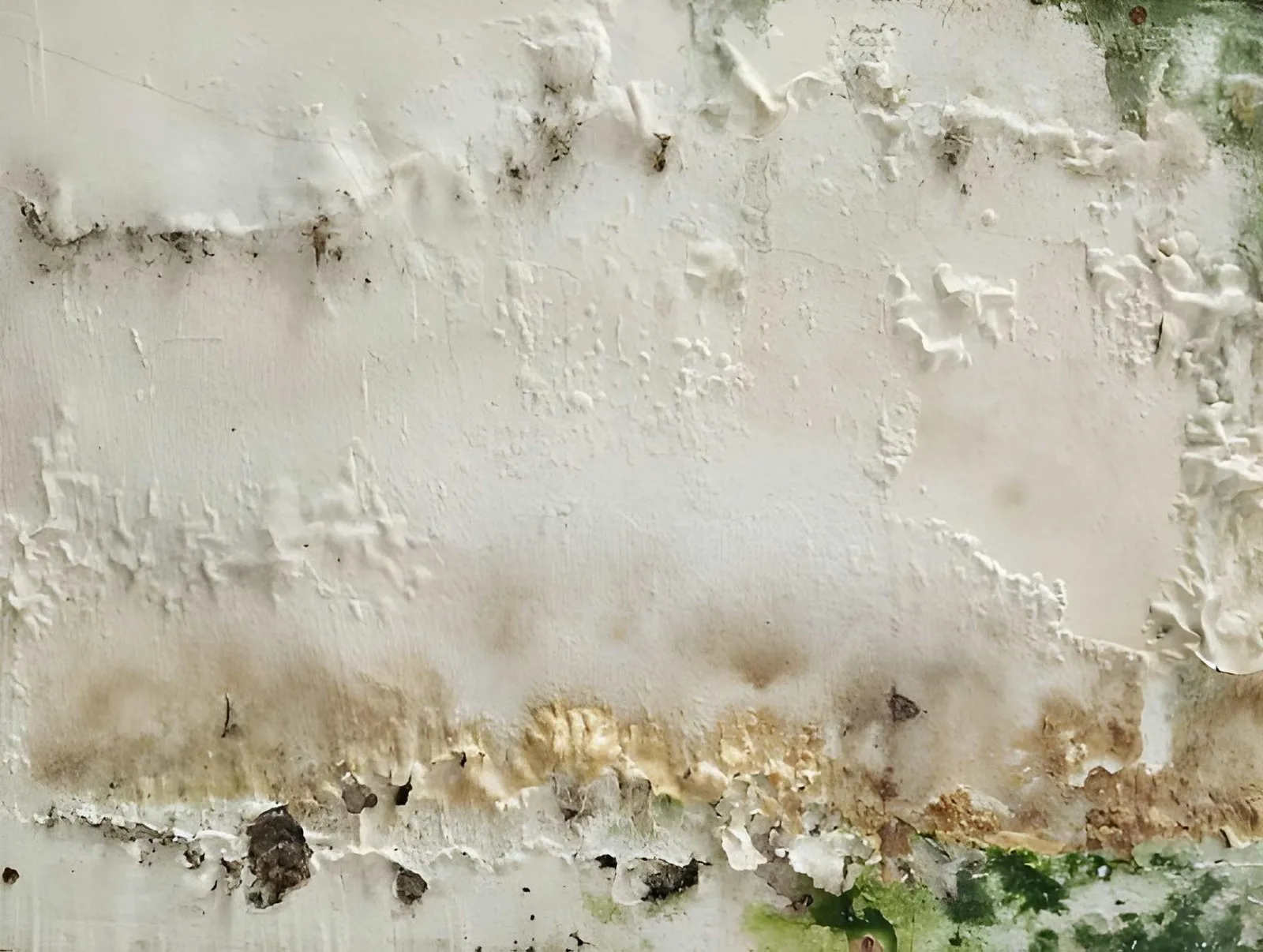
Mold in a house is not some rare misfortune. A July 2026 mold statistics report from Gitnux puts the share of American households living with a current visible mold or dampness problem at 15 percent, which works out to roughly one home on every block of a Benton subdivision. What separates a nuisance from an insurance claim is usually the response to it. Bleach is the response almost everyone reaches for, and on porous material it does very little: the chlorine stays on the surface, the water carried with it soaks into the paper facing of the drywall, and the growth that actually matters is behind the paint where nothing sprayed ever reached. The stain vanishes. The colony does not.
One rule here carries no exceptions at all. Never mix bleach with ammonia or with any cleaner containing it, because the combination releases chloramine gas, and people land in an emergency room over a bathroom they were only trying to scrub. Ventilate whatever product you do end up using, and read the label before you open it. The box fan is the second mistake, and it is the expensive one, because a fan aimed at a musty closet does exactly what fans do, which is move air from where it is to everywhere else, and the spores ride along into the hallway, the return vents, and the living room upholstery.
Containment works on the opposite principle, and a fireplace explains it better than any diagram ever will. When a chimney is drawing properly, air travels one direction only, in past your ankles and up the flue, and the smoke never gets a vote about entering the room. A remediation crew builds that same one way street out of plastic sheeting and a negative air machine, holding the work area at slightly lower pressure than the rest of the house, so every bit of air leaving it exits through a filter instead of drifting into a kid’s bedroom. Restoration crews find the same thing job after job, which is that the musty smell had already reached rooms nobody had touched, and cutting into a wall without containment is what turns a closet problem into a whole floor problem.
Testing before treatment is not an upsell either. It sets the boundary of the work area and decides which antimicrobial gets used, and it hands you a starting number to measure the finished job against. Skip it and you are guessing at both ends, and the person paying for that guess is you, in September, when the smell comes back.
A Real Remediation Runs On A Schedule
That sour smell is the house telling on itself, and it does not clear on its own schedule. The first day is assessment and containment: sampling, plastic, the negative air machine, and a route for debris that does not cross the kitchen. Day two and day three are removal and treatment, when the drywall that wicked moisture comes out and the framing behind it gets cleaned. Most residential projects run three to seven days with drying equipment humming the entire time, and verification comes last, which is the only part that proves the work actually worked. The first week after the crew leaves is your own test, because a house smelling the same on day six was never really dried.
Timing at the front end decides how big any of this gets. Wet or damp materials need to be dried within 24 to 48 hours, the window the EPA’s brief guide to mold, moisture and your home puts on it before dormant spores take hold on porous materials. And if you suspect growth inside a wall cavity or under flooring, do not open it up yourself. Have it assessed by a professional, because pulling a baseboard off a hidden colony releases the whole thing into the room you are standing in.
Homeowners comparing mold remediation Benton AR options should ask for two documents by name, the testing report at the start and the verification report at the end. A company that hands over both is running a process you can check yourself. One that offers neither is selling you a very expensive box fan.