

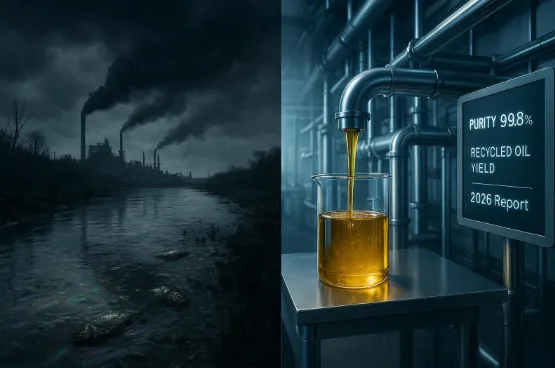
Used oil is a classic double-edged sword: it is one of the most dangerous waste products created by modern society and also one of the most ignored money-making resources.
To answer the question directly, used oil is a serious environmental risk when thrown away carelessly, capable of harming ecosystems and water supplies. But it becomes a strong source of income when handled through professional recycling and re-refining services.
Its role depends entirely on how people handle it; in careless hands, it is a pollutant, but in skilled hands, it is “liquid gold” that can be processed back into high-quality lubricants or fuel.
The global move toward a circular economy has highlighted that waste is simply a resource in the wrong place. While many businesses once saw used lubricants as a costly disposal problem, the modern view focuses on the inherent value of used oil.
Whether we are talking about the synthetic oils drained from a jet engine or the vegetable oils from a commercial kitchen, the ability to reclaim and reuse these liquids is a major win for both business profits and the environment.
What Is Used Oil and Where Does It Come From?
Key Properties of Used Oil
Technically, used oil is any petroleum-based or synthetic oil that has been used and, as a result, is contaminated by physical or chemical impurities. During its working life-whether it’s lubricating a piston or cooling a transformer-the oil breaks down under heat and collects various unwanted materials. These include dirt, metal particles, water, and chemicals from additives that have broken down over time.
These impurities are what make the oil “used,” but they do not usually destroy the base oil’s molecular structure.
One of the most important properties of oil is that it does not actually “wear out” in the usual sense; it just gets dirty. The base oil molecules stay surprisingly strong. This durability is exactly why used oil is so valuable for recycling.
Even after thousands of miles in an engine, the core hydrocarbons can be cleaned of their contaminants and brought back to a quality that is often hard to tell apart from new oil. However, in its “dirty” state, it is thick, sticky, and carries a mix of heavy metals like lead, cadmium, and chromium.
Common Sources: Automotive, Industrial, and Commercial
The sources of used oil are as varied as modern industry. The most visible source is the automotive sector-millions of cars, trucks, and buses get regular oil changes, creating a large and steady stream of used motor oil. Beyond the local mechanic, the wider transportation industry, including aviation and shipping, also adds greatly to the global volume of used lubricants.
In factories, large amounts of hydraulic oils, gear oils, and metalworking fluids are used to keep machines running smoothly. In the commercial sector, especially in the food industry, used cooking oil (UCO) has become a major sub-market. While different in makeup from mineral oils, UCO follows the same basic idea: it is a waste product from deep-frying that, when collected, serves as a key raw material for making biodiesel and renewable diesel.
Why Is Used Oil Considered an Environmental Risk?
Water Pollution: Impact on Aquatic Ecosystems
Used oil is a serious problem for water systems because it does not dissolve and it lasts a long time. A single gallon of used motor oil can pollute one million gallons of fresh water-enough to supply 50 people for a year. When oil gets into a lake, river, or ocean, it does not disappear; it spreads into a very thin film called a “slick” that blocks oxygen from entering the water. This effectively suffocates fish, insects, and aquatic plants.

Oil also coats the feathers of birds and the fur of mammals, destroying their natural insulation and ability to float. This often leads to death from cold exposure or drowning. Because oil clings to everything it touches, it can stay in wetlands and marshes for decades, slowly releasing poisons into the food chain and disturbing the breeding cycles of many aquatic species.
Soil Contamination and Long-Term Effects
When used oil is spilled on the ground, it does not just stay on the surface. It slowly moves downward, coating soil particles and killing the microorganisms that are needed for healthy soil. This can make land barren, stopping the growth of plants and trees. The long-lasting danger comes from the oil’s ability to reach the water table, where it can pollute underground water sources that towns and cities use for drinking water.
Cleaning up oil-soaked soil is a hard and costly job. It often requires “dig and dump” work where the soil is physically removed and treated elsewhere, or bio-remediation methods that use specific bacteria to feed on the hydrocarbons. If it is not treated, the heavy metals in the oil stay in the soil for a very long time, creating a risk for any later farming or housing on the site.
Air Pollution from Improper Disposal
In some areas, a common but dangerous habit is the “backyard burning” of used oil for heat. While oil holds a lot of energy, burning untreated used oil in regular heaters sends a toxic mix of heavy metals and tiny particles into the air. Lead, zinc, and magnesium, which are common additives in motor oil, become airborne and can be inhaled by anyone nearby.
This local air pollution adds to smog and acid rain. Large industrial boilers have scrubbers and filters to handle these pollutants, but small, unregulated burning skips these controls. This turns what could be a useful fuel into a direct threat to the breathing health of the community.
Hazards to Human and Animal Health
The chemical mix in used oil is naturally toxic. It contains polycyclic aromatic hydrocarbons (PAHs), many of which cause cancer. Long-term skin contact with used motor oil has been linked to skin cancer in both humans and animals. For wildlife, swallowing oil through grooming or eating contaminated food can cause internal bleeding, organ damage, and nervous system problems.
For people, even small amounts of used oil in drinking water can cause many health problems, from stomach issues to long-term chronic diseases. The heavy metals in the oil, such as lead, are especially dangerous for children, as they interfere with brain growth and the nervous system.
Case Examples of Environmental Damage
History contains many examples of “midnight dumping,” where used oil was poured into storm drains or spread on rural roads to keep dust down. In the late 20th century, several “Superfund” sites in the United States were created specifically because of massive used oil mishandling. These sites needed millions of dollars in taxpayer money to clean up after the companies responsible went bankrupt.
More recently, cities have had to deal with “fatbergs”-huge clogs in sewer systems caused by people pouring used cooking oil and grease down the drain. These clogs cause sewage to back up into homes and overflow into rivers, creating a public health emergency and costing cities millions in emergency repairs. These cases clearly show that “out of sight” never means “gone” when dealing with oil disposal.
Risks of Improper Disposal of Used Oil
Legal Penalties and Regulatory Fines
In 2026, environmental rules are stricter than ever. Governments around the world have classified used oil as a hazardous or controlled waste, meaning its movement and disposal are tracked very closely. Businesses caught dumping oil or giving it to unlicensed collectors face huge fines that can easily reach tens of thousands of dollars per day of violation.
Beyond normal fines, many areas now bring criminal charges against business owners who knowingly ignore disposal laws. Agencies like the EPA or the European Environment Agency use satellite images and detailed chemical “fingerprinting” to trace spills back to their source, making it very hard for polluters to hide their actions.
Cleanup Costs and Environmental Remediation
The cost of cleaning up an oil spill is far higher than the cost of proper recycling. If a company’s storage tank leaks or a truck carrying oil crashes, the company responsible must pay every cent of the cleanup bill. This includes hiring special hazmat teams, repairing the damaged environment, and often paying for long-term testing of groundwater.
In many cases, standard insurance does not cover all of these expenses, especially if negligence is proven. A single major leak can destroy the finances of a small or mid-sized company. The “true value” of careful used oil management often lies in the money saved by avoiding a major environmental disaster.
Public Health Impacts
Improper disposal damages more than just nature; it harms people. When used oil seeps into the local environment, it can cause health crises across entire communities. This often leads to class-action lawsuits that can trouble a company for decades. The damage to a company’s name after polluting a local water supply is often permanent, leading to a loss of public trust and support.
Workers who handle used oil without the right protective gear or training are also at risk. Long-term exposure to the chemicals in used lubricants can cause serious illness, leading to high worker compensation costs and loss of productivity. Proper management is, therefore, a key part of workplace health and safety.
Can Used Oil Be a Valuable Revenue Source?
Market Value for Reclaimed and Re-Refined Oil
The used oil market is an active and growing part of the global economy. Because oil can be re-refined again and again, it has an ongoing market value that changes with the price of new crude oil. When crude prices rise, demand for recycled base oil increases as manufacturers look for cheaper raw materials. This creates a situation where businesses can actually earn money from what used to be their “waste.”
By adopting solutions from Save Fry-Oil, companies can maximize the quality of their oil before it enters the recycling stream, ensuring they cut operating costs sustainably while contributing to a circular economy.
In many areas, collection companies pay rebates to large producers of used oil. Instead of paying for disposal, a large trucking fleet or a major factory might receive payment for every gallon of oil they send into the recycling stream. This turns a former liability into a real income line on the balance sheet.
Industrial Uses and Economic Opportunities
The money-making options go beyond simply selling the waste oil. The used oil industry supports thousands of jobs in collection, transport, and advanced refining. The final products-re-refined lubricants-are sold back into the market, often at prices that compete well with new products made from crude. This creates a self-feeding business cycle.
Used oil also serves as a key fuel in heavy industries such as asphalt plants, cement kilns, and steel mills. These operations gain from the high energy content of the oil, which offers a cheaper fuel option than natural gas or coal. This steady demand from industry helps keep a base level of market value for used oil.
How the Used Oil Market Operates
The market runs through a network of “collectors” and “processors.” Collectors are the transport specialists who visit shops and plants, pump out storage tanks, and move the oil safely. They then sell this bulk oil to processors or re-refiners. The price depends on the “purity” of the load; oil heavily mixed with water or antifreeze brings a lower price than relatively clean used oil.
Clear information is central to this market. Modern digital tools now let generators check the market price of oil in real time and arrange pickups with just a few clicks. This app-based approach to waste oil collection has made it easier even for small businesses to benefit financially from their used oil.
Methods for Reusing and Recycling Used Oil
Re-Refining: Turning Used Oil into Lubricants
Re-refining is the highest standard of oil recycling. This process sends used oil through several complex steps-including dehydration, vacuum distillation, and hydro-treatment-to remove all impurities and old additives. The end result is a “base oil” that is chemically the same as virgin base oil made from crude. This base oil is then mixed with new additives to create motor oil, hydraulic fluid, or gear oil.
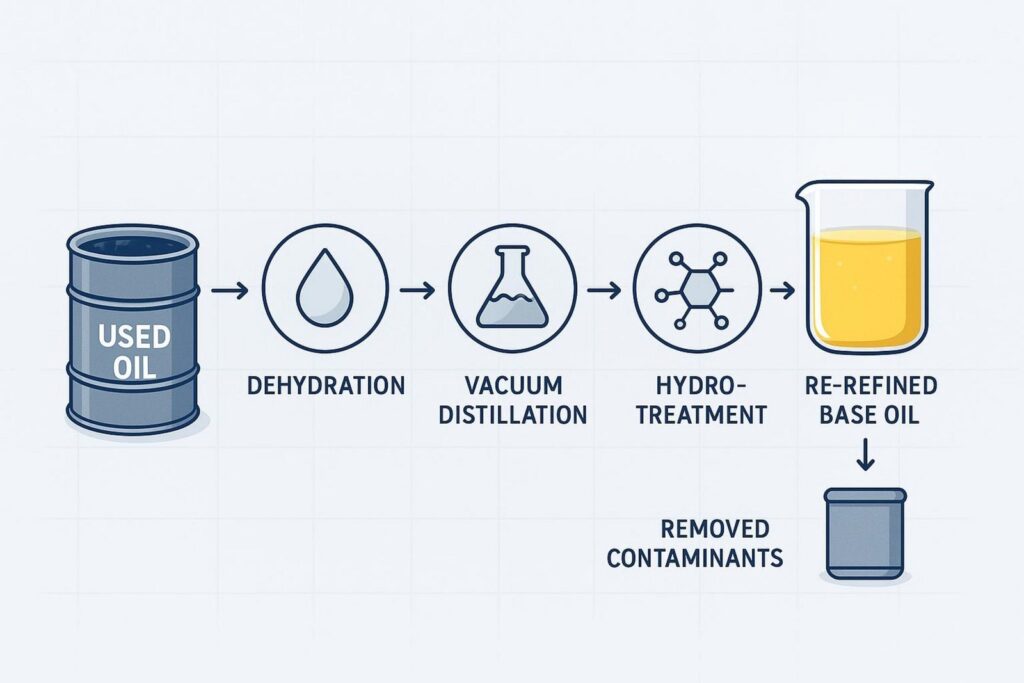
Re-refining uses much less energy than making oil from crude taken from the ground. It also keeps the resource in use; instead of burning the oil once and losing it, re-refining keeps the molecules working for another full cycle. It is one of the clearest examples of “reduce, reuse, recycle” in the petroleum industry.
Processing Used Oil as Fuel
While re-refining is preferred, a large share of used oil is processed for “energy recovery.” In this method, the oil is filtered to remove solids and water, then sold as a heavy fuel oil. This is often used in large ships or industrial furnaces. While this use is a one-time burn, it is still far better than dumping, because it replaces some need for new fossil fuels in energy-hungry industries.
Some special heaters are built specifically to burn used oil on-site. These are popular in auto repair shops, where the oil removed from cars during the day is used to heat the building. This gives an instant money-saving benefit by cutting heating costs, as long as the equipment meets modern emission standards.
Innovative Applications and New Products
New ideas in this field are growing quickly. Researchers are finding ways to use parts of used oil in making asphalt for roads, creating road surfaces that last longer and are more flexible. Others are testing the use of used cooking oil as a “bio-asphalt” binder, which cuts the carbon footprint of road building by a large margin.
There is also a rising market for bio-based lubricants made from recycled vegetable oils. These are especially useful in “loss-in-environment” uses, such as chainsaw bar oils or railway flange lubricants, where the oil is expected to end up in the soil. Using a recycled, biodegradable product in these situations offers a double benefit for the environment.
Benefits of Proper Used Oil Management
Reduces Pollution and Protects Ecosystems
The most direct benefit of proper management is the lack of disasters. By keeping oil in closed systems and sending it through professional recycling channels, we stop major pollution of rivers, lakes, and soil. This protection allows plants and animals to thrive and keeps natural resources clean for future generations. It is the first line of defense against the “environmental risk” side of the used oil issue.
Conserves Non-Renewable Resources
Every gallon of oil we recycle is a gallon we do not have to pump from underground. Oil is a limited resource that is becoming harder and more environmentally risky to extract. By extending the life of the oil we already have, we lower the pressure on global reserves and slow down the spread of drilling in sensitive places like the Arctic or deep oceans.
Saves Energy Compared to Producing New Oil
Making a gallon of re-refined base oil uses about one-third of the energy needed to refine a gallon of base oil from crude. This is because nature has already done the “heavy work” of forming the hydrocarbon molecules. Recycling oil is, in turn, a strong energy-saving practice that helps cut the overall carbon footprint of the industrial and automotive sectors.
Supports Circular Economy Initiatives
Proper used oil management is a textbook example of the circular economy at work. It moves us away from the “take-make-waste” pattern toward a system where waste is reduced and materials stay in use for as long as possible. This shift builds a more resilient economy that is less tied to unstable global commodity markets and more focused on local resource recovery and job creation.
How to Handle and Dispose of Used Oil Responsibly
Finding Certified Collection Facilities
For individuals and small businesses, the first step is finding a certified drop-off point. Many auto parts stores and local service stations act as collection centers for used motor oil. For used cooking oil, many cities now offer special bins at recycling centers. Make sure the facility is licensed, as this guarantees the oil will be handled according to environmental rules.
Safe Storage and Transport Tips
Responsible handling starts where the oil is produced. Used oil should be kept in clean, leak-proof containers-ideally the same type the new oil was sold in. Containers should be clearly labeled and stored away from heat and drains. Most importantly, never mix used oil with other fluids like gasoline, antifreeze, or solvents. Mixing these liquids makes the oil “contaminated” and often impossible to recycle, turning a potential source of income into a very costly hazardous waste issue.
Educating Others About Used Oil Risks
Awareness is the strongest driver of change. Many people still do not realize how much harm even a small amount of oil can cause. By teaching neighbors, coworkers, and local groups, we can build a culture of care and responsibility. Simple steps, like explaining why oil should never go down a storm drain, can prevent thousands of gallons of pollution over a lifetime.
Moving Forward: Turning Used Oil from Risk to Resource
Best Practices for Individuals and Businesses
For businesses, the smartest approach is to treat used oil as an asset. This means keeping detailed records of oil use and disposal, using secondary containment for all storage tanks, and working with trustworthy, tech-focused recycling companies. For individuals, it means making that extra trip to the recycling center instead of choosing the quick but harmful option. In 2026, tools for responsible management are widely available; the key is simply choosing to use them.
Opportunities for Innovation in Oil Recycling
The future of oil recycling is driven by new technology. We are seeing “smart tanks” with sensors that track oil quality and volume, automatically alerting collectors when a pickup is needed. Researchers are also working on more efficient hydro-cracking methods that can treat even very degraded synthetic oils, making sure that no drop of oil is ever truly “wasted.”
How Public Awareness and Policy Drive Change
The move from risk to resource comes from a mix of public pressure and good policy. When customers ask for “green” lubricants, manufacturers respond. When governments give tax breaks for re-refined products, the market expands. As we approach the middle of the 21st century, the goal is clear: a world where “used oil” is no longer seen as a threat, but as an important, constantly circulating part of a sustainable global economy.
As we move further into 2026, the global trade of recycled base oils is starting to rival that of virgin oils in certain high-performance sectors. Growing economies are increasingly turning to “urban oil mining”-recovering resources from city waste streams-as a way to gain energy independence. This change helps stabilize local economies and creates a buffer against global supply chain shocks. By treating every drop of used lubricant as a building block for the next generation of machines, we separate industrial growth from environmental damage, showing that the true value of used oil lies in its ongoing potential for renewal.