

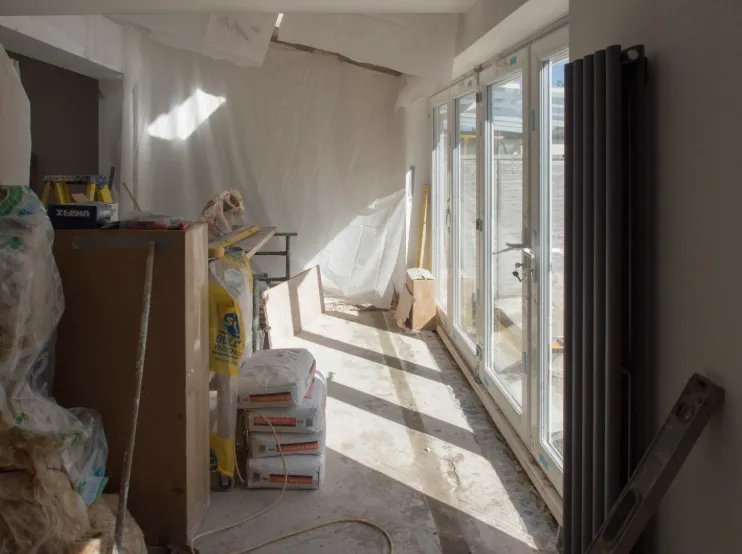
Ever tried painting with all the furniture shoved to one side? By the second day, you’re climbing over lamps and working around dust. Projects don’t always fail from cost or skill. Sometimes, there’s just no space to move.
Homeowners in Davison run into this more often than they expect. Basements are full, garages already hold seasonal gear, and spare rooms double as offices or guest spaces. When a renovation starts, belongings get pushed from one corner to another, sometimes wrapped in old sheets and hope. The result is cramped hallways, scratched floors, and a project that feels heavier than it should. Space, or the lack of it, becomes the real obstacle.
Why Space Changes the Way Projects Move
Extra space sounds like a luxury, but during a home project it acts more like a tool. When a kitchen is being updated, cabinets come off walls and appliances get pulled forward. If there is nowhere safe to place them, they sit in the middle of the room, slowing everything down. Workers move carefully, sometimes too carefully, and simple tasks stretch longer than planned.
Even small jobs benefit from breathing room. Replacing flooring, for example, goes smoother when rooms are cleared fully instead of half-emptied. Dust travels less when fewer objects are in the way. Corners can be reached without twisting around a stack of boxes. The work is not only faster; it tends to be cleaner.
There’s also the mental side. A crowded project site feels chaotic. Decisions become rushed. Mistakes slip in because tools are buried under drop cloths or hardware goes missing in piles. When items are cleared out properly, focus improves. It’s subtle but noticeable.
Creating Room Beyond Your Walls
Sometimes the square footage inside the house just isn’t enough, no matter how carefully things are rearranged. In Davison self storage might solve most of your problems. During larger renovations, furniture needs to be protected from dust and impact. Appliances may need temporary placement. Family heirlooms and electronics shouldn’t be balanced on top of moving boxes in a damp basement. That’s when off-site space becomes practical rather than optional.
Instead of rotating belongings from room to room, items can be moved out entirely for a few weeks or months. Storage facilities like National Storage offer units designed to hold furniture, tools, or boxed items securely while work is underway. It isn’t about hiding clutter. It’s about protecting what you own and giving the project a fair chance to run smoothly.
Renovations Run on Logistics
People often focus on finishes like paint colors, tile patterns, cabinet hardware. But projects are really managed through logistics. Where will the materials be stored before installation? Where will old fixtures sit before disposal? If those questions aren’t answered early, the house absorbs the impact.
Take a bathroom remodel. New vanities arrive in large cartons. Tiles are delivered in heavy boxes. If these sit in a hallway for days, daily life becomes an obstacle course. Kids brush against them. Pets knock into corners. Damage becomes more likely, and frustration builds.
Clear staging areas change that. Materials are kept dry and flat. Tools are organized instead of scattered. Even contractors appreciate a site where they can lay things out properly. Work flows better when there is room to move without constant adjustment.
Protecting What Isn’t Being Replaced
Another issue that gets overlooked is the safety of items not involved in the renovation. Dust from sanding drywall travels farther than expected. Fine particles settle on upholstery, electronics, and clothing. Even when rooms are sealed off, some spread is inevitable.
Moving valuable or delicate belongings out of the immediate area reduces cleaning time later. It also reduces risk. Temporary relocation to a more suitable space would have prevented that.
It may feel inconvenient at first to transport items elsewhere, but the alternative is constant shifting and covering. And covers slip. Tape peels. Life continues around the mess.
Temporary Space for Long-Term Gains
Not every project is dramatic. Some are simple upgrades: new windows, updated lighting, built-in shelving. Yet even these benefit from space planning. Clearing out a room completely allows measurements to be accurate. Installers can check wall lines without furniture blocking sight.
There’s also the advantage of seeing the room empty. Without distractions, flaws become visible. Uneven trim, old scuffs, forgotten nail holes. Addressing these while the space is open often prevents small regrets later.
In recent years, more people have taken on DIY projects, partly influenced by online tutorials and flexible work schedules. The enthusiasm is good. But enthusiasm without space leads to crowded work areas and half-finished tasks. Extra room supports better outcomes.
Living Through the Project
Renovations rarely pause daily life. Meals still need to be made. Work calls still happen. Children still spread out homework. When projects spill into living areas, tension rises quickly.
Having items temporarily relocated eases that strain. A dining table stored away for a month frees the kitchen for real work. Boxes moved out of a hallway reduce tripping hazards. The house feels less like a warehouse and more like a place where people still live.
It’s worth saying that extra space doesn’t solve every problem. Budgets still need to be managed. Timelines still shift. But when belongings are not stacked in every corner, at least one layer of stress is removed.
Planning Ahead, Even a Little
The best time to think about space is before demolition begins. Walk through the house and identify what truly needs to stay accessible and what can be moved out temporarily. Label boxes clearly. Keep hardware from disassembled furniture in sealed bags taped to the pieces they belong to. These small steps prevent confusion later.
And if the project grows, as they sometimes do, having a plan for overflow keeps things steady. It prevents that late-night scramble when you realize there’s nowhere left to put the extra cabinet or the pile of trim boards.
Home projects feel bigger than they are when space is tight. When room is made, inside or outside the house, the work tends to feel manageable. Tools are found quickly. Surfaces are protected. People move without bumping into stacked boxes. It’s not glamorous, and it won’t show up in the final photos. But the difference is felt from the first day until the last coat of paint dries.