

Key Takeaways
- IOPs offer structured support, enabling individuals to uphold daily commitments alongside treatment.
- They deliver comprehensive mental health care that combines therapy, education, and group support.
- Skills learned in IOPs can be applied immediately in real-life settings to reinforce progress.
- Cost-effective compared to inpatient treatment while maintaining high standards of care.
- Family participation in IOPs helps build stronger support networks and communication.
Table of Contents
- Structured Support Without Full-Time Commitment
- Comprehensive Care Approach
- Immediate Application of Learned Skills
- Cost-Effectiveness
- Family Involvement
- Conclusion
Intensive Outpatient Programs (IOPs) are designed to bridge the gap between full-time residential care and standard outpatient therapy, offering a structured environment without demanding a total break from daily life. Through flexible scheduling and a combination of therapies, IOPs provide individuals with the support they need for recovery while still living at home. For those in Colorado, the Intensive Outpatient Program in Boulder, Colorado offers a comprehensive example of how these programs can be integrated into everyday routines for sustained improvement.
Individuals no longer have to choose between getting help and maintaining their responsibilities at work, school, or home. Participating in an IOP enables them to remain engaged in their communities, applying what they learn in therapy immediately. The blend of accountability, flexibility, and practical skill-building provides participants with a robust foundation for long-term success and effective symptom management.
The benefits of IOPs go beyond flexibility. These programs typically include a multidisciplinary team of mental health professionals, ensuring that participants receive a holistic approach tailored to their specific needs. With frequent therapy sessions, psychoeducation, and skill-building workshops, IOPs foster connection, resilience, and lasting behavioral change while reducing the stigma that may come with residential stays.
Families are often included in the process, strengthening relationships and building a more supportive home environment. This family involvement can help individuals feel less isolated and more understood, which is crucial for lasting recovery. For more information about intensive outpatient care and its role in mental health support, resources from the National Alliance on Mental Illness offer helpful insights and data.
Structured Support Without Full-Time Commitment
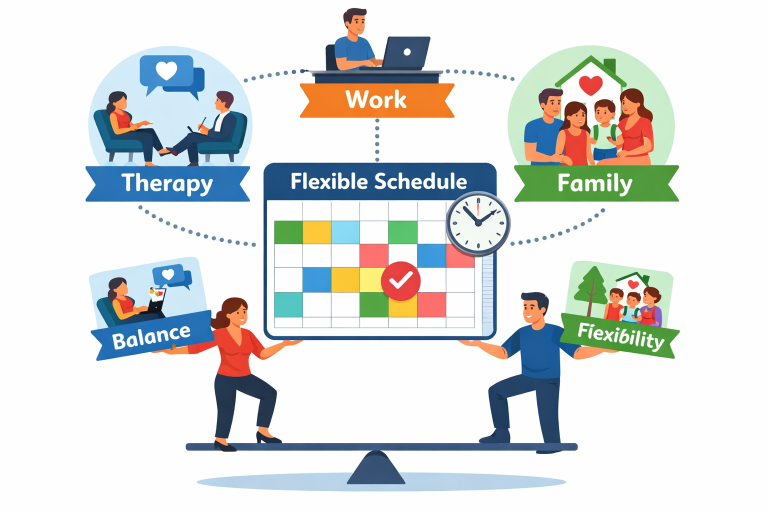
The structure of an IOP allows participants to benefit from a scheduled, consistent approach to therapy without having to leave their homes for an extended period. This flexibility is a crucial factor for many individuals who might otherwise avoid treatment because of obligations to their work, education, or loved ones. Most IOPs require participation several days a week for a few hours at a time, allowing the maintenance of daily routines.
This balance decreases the disruption that often comes with inpatient programs, making help more accessible to working professionals, parents, students, and caregivers. The steadiness and predictability of regular sessions also foster accountability and trust, both of which are critical components of the therapeutic process.
Comprehensive Care Approach
IOPs adopt a multidisciplinary strategy, often including individual therapy, group sessions, psychoeducation, medication management, and life skills workshops. This combination addresses the emotional, psychological, and social aspects of mental health recovery. Each component is designed to help individuals understand their conditions, identify triggers, learn coping mechanisms, and develop strategies to avoid relapse.
Group therapy, in particular, plays a pivotal role, as it encourages social connection and shared experiences among participants. This can reduce feelings of isolation, providing a caring community that fosters empathy and mutual support. For more on the importance of group-based mental health support, the Psychology Today guide to group therapy provides detailed information.
Immediate Application of Learned Skills
One significant advantage of IOPs is the real-time application of skills. By attending therapy sessions and then returning to daily life, individuals can practice coping strategies and interpersonal skills immediately. This allows them to address challenges as they arise and receive guidance and feedback in subsequent sessions.
This immediate reinforcement of learned behaviors helps solidify progress. Clients can also work on specific real-world issues with the support of their therapists, which typically leads to improved resilience and a greater sense of personal competence.
Cost-Effectiveness
Intensive Outpatient Programs are generally more affordable than full-time inpatient treatment since they do not require round-the-clock staffing, accommodations, or meal services. This makes high-quality care accessible to more individuals while still ensuring robust support and therapeutic engagement.
Insurance often covers a substantial portion of IOP costs, further reducing the financial barrier to entry. For those interested in options or seeking help, consulting with providers about payment plans and coverage can open doors to treatment that once seemed out of reach.
Family Involvement
Many IOPs invite families to engage in the recovery process through education, counseling sessions, or workshops. Family therapy can address patterns of communication, foster empathy, and encourage understanding of mental health challenges.
This involvement enables families to become active allies in the recovery journey, leading to stronger relationships, reduced conflict, and improved outcomes for everyone involved. A supportive family network has been shown to dramatically influence long-term mental health recovery.
Conclusion
Intensive Outpatient Programs stand out as a powerful, practical option for those seeking mental health support that does not disrupt daily life. Individuals gain comprehensive care, real-world skill application, and family involvement in an accessible and cost-effective format. These factors combine to create a strong foundation for continued growth and recovery, allowing people to thrive within their communities as they heal.